
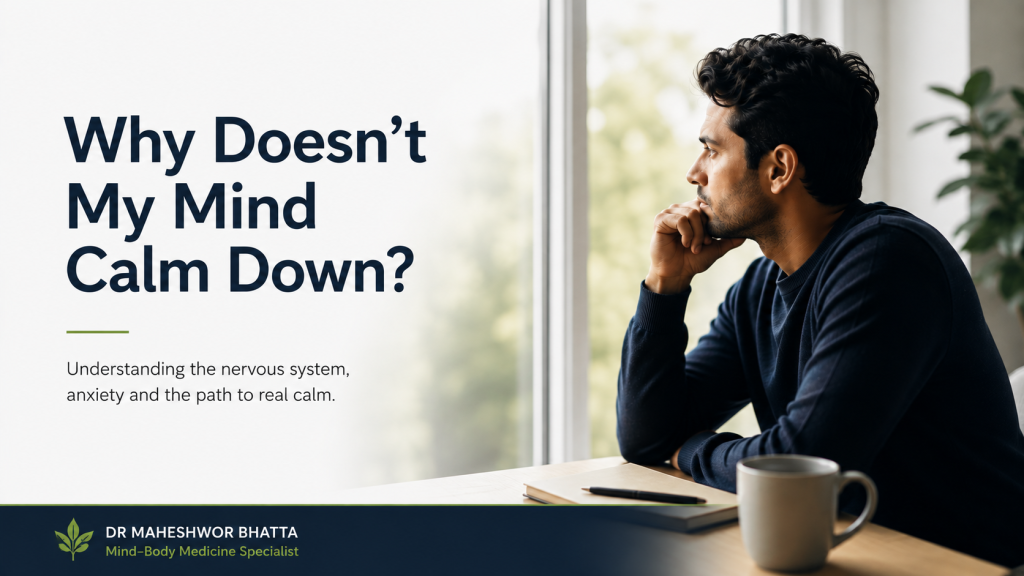
Have you ever thought…
“Nothing is actually wrong, but I still feel anxious, restless, or unable to relax.”
Many people believe anxiety always comes from problems in life.
But in reality, your nervous system can remain in a protective state even when the danger has passed.
This is why you may continue to experience:
- Constant overthinking
- Restlessness
- Poor sleep
- Difficulty concentrating
- Irritability
- Muscle tension
- Feeling “on edge” throughout the day
These experiences are common, but they are not simply “in your mind.”
Anxiety Is a Nervous System Pattern
Your brain constantly asks one important question:
“Am I safe?”
When the nervous system repeatedly experiences stress, uncertainty, or emotional overload, it can begin to interpret ordinary situations as potential threats.
Over time, this becomes a learned pattern.
Instead of returning to a calm, balanced state after stress, the body remains in survival mode.
The result is ongoing physical and emotional symptoms—even when life seems relatively normal.
Why Positive Thinking Alone Often Doesn’t Work
Many people try to stop anxious thoughts by telling themselves:
“Relax.”
“Don’t think about it.”
“Everything is fine.”
While these strategies may help briefly, they often fail because the body itself has not yet received the message that it is safe.
A dysregulated nervous system cannot always be calmed through logic alone.
The body and brain need to work together.
A Mind–Body Approach
Modern neuroscience and mind–body medicine suggest that recovery involves more than managing thoughts.
A comprehensive approach may include:
- Improving sleep and daily rhythms
- Breathing practices that support nervous system regulation
- Physical movement
- Emotional awareness
- Reducing chronic stress load
- Gradually retraining the brain’s response to perceived threat
The goal is not to suppress symptoms but to restore regulation.
When Should You Seek Professional Help?
If anxiety or stress has been affecting your daily life for several weeks or months—especially your sleep, relationships, work, or overall well-being—it may be helpful to seek a professional assessment.
Early support often prevents symptoms from becoming more persistent.
Final Thought
Calm is not something you force. It is something your nervous system learns.
With the right understanding, consistent practice, and evidence-based guidance, many people can gradually regain emotional balance and resilience.
Need professional guidance?
If stress, anxiety, emotional exhaustion, or persistent overthinking is affecting your quality of life, you can book a Mind–Body Regulation Consultation for a personalized assessment and practical plan based on evidence-informed mind–body medicine.
By Dr. Maheshwor Bhatta
Mind–Body Medicine Specialist